
Ford Power Class Change
A Ford power class change is a software update for the engine control unit (ECU) that changes a vehicle's power output without a traditional remap
This is possible on certain models, like the Ford Transit with the SID212 ECU, where the hardware is identical across different power outputs, and only the software differs. By changing the software, a lower-powered vehicle can be updated to a higher-spec factory power class, for example, from 130bhp to 185bhp
We have a minimum charge of £180 to carry out any ECU programming services, this requires knowledge, skill, training, specialist equipment/tools and software
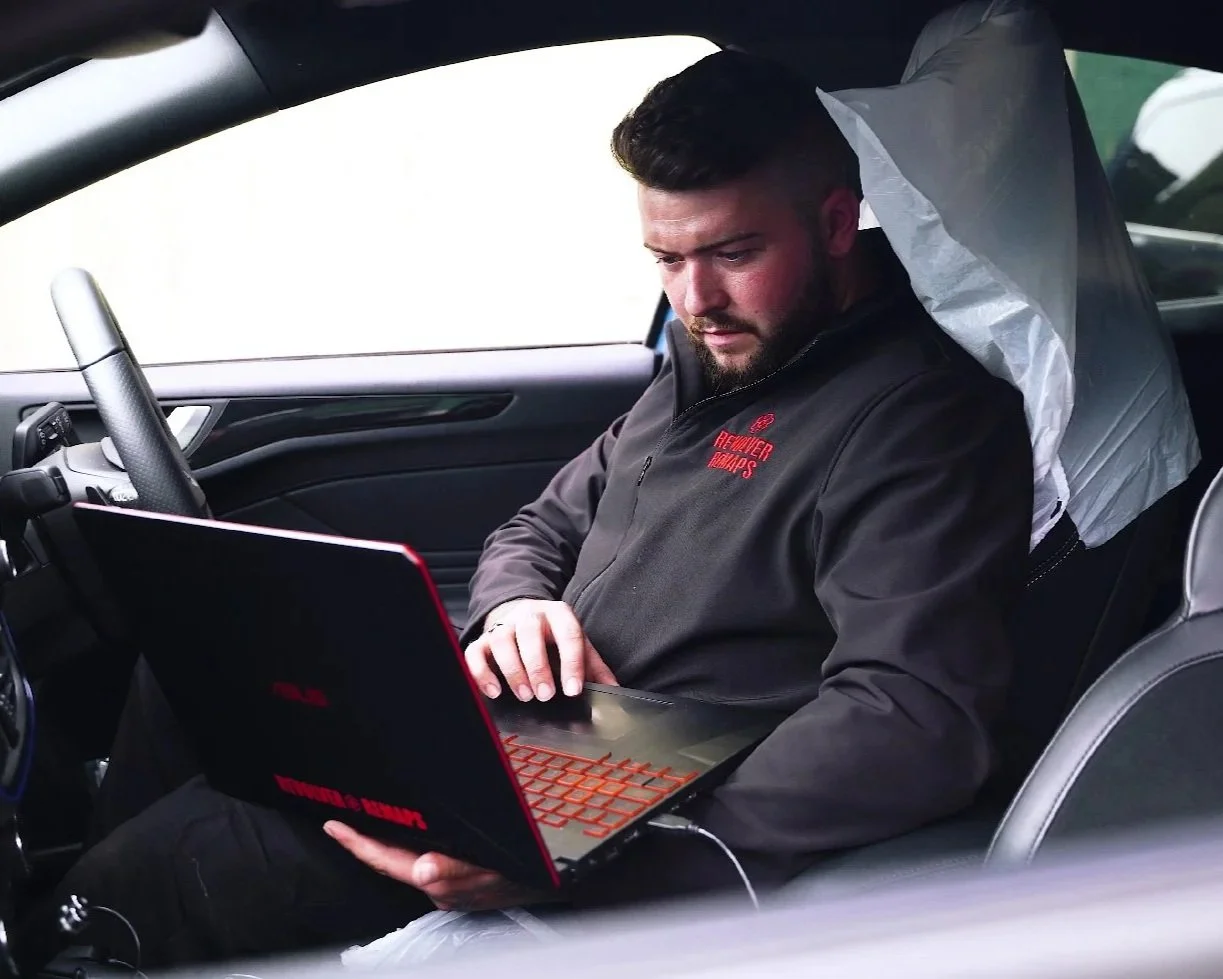
How it works
This is not a custom tune, but rather a change to an official, factory-built software version.
Vehicles that share a common engine block can have their power classes changed. For example, the 2.0-liter EcoBlue diesel engine in Ford Transits is used in many different power outputs (e.g., 105, 130, 170, 185bhp).
We use Ford diagnostic software to flash the higher-spec factory map onto the vehicle's ECU.
This results in a significant increase in power and torque, improved throttle response, and better overall performance.
This method is not applicable to all Ford vehicles, as some newer ECUs have security that currently prevents this type of change.

Example
The 130bhp power class is one of the most common and popular power outputs for the Ford 2.0 TDCI EcoBlue engine, particularly in commercial vehicles like the Transit and Transit Custom.
A 130bhp Ford Transit with a 2.0 TDCI engine can be upgraded to the 170bhp "Panther" specification.
A 130bhp model can gain an additional 40bhp and 20nm of torque after a power class change.

Considerations
Changing the power class may void the vehicle's warranty, so it is best to check with Ford and/or your insurance provider before proceeding.
Another tuning alternative, performance boxes, can also provide a similar power increase, but may not be suitable for all vehicles or may interfere with vehicle systems.